Your Book Is Finished… Now What? A Simple Guide to Choosing a Publishing Path
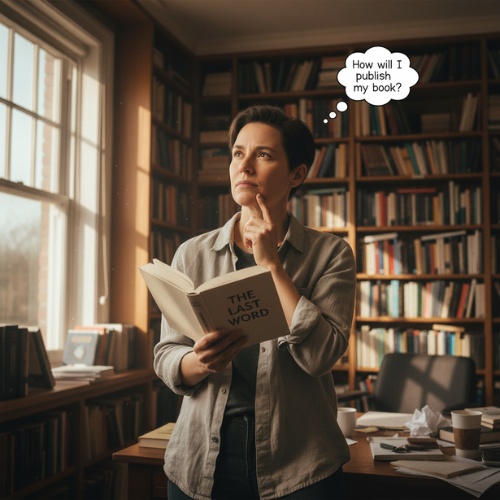
During lockdown in 2020, I started writing my first book.
I naïvely thought I’d be done within a few months. Spoiler alert: I wasn’t. It took me five years to complete! But that’s not the point of this story.
Somewhere along that long journey of drafts, edits, and rewrites, a new question started to form in my mind: How am I actually going to publish this thing? Like many new authors, I assumed traditional publishing was the obvious path. So I reached out to several publishers in the US, hoping someone would see the value in my work.
It didn’t take long to hit a wall.
Many publishers simply don’t accept unsolicited proposals. Without an agent or a large platform, I quickly realized that traditional publishing wasn’t a viable option for me. And so—after a lot of research, prayer, and trial and error—I chose to self-publish. It wasn’t the path I originally pictured, but looking back, it was exactly the right fit for my book and my modest network.
Maybe you're in a similar place right now—writing a book or dreaming about writing one—and you’re wondering what route you should take. The good news is that you really only have two main options: traditional publishing or self-publishing. And understanding the differences will make your decision a whole lot easier.
So, let’s talk about them.
Traditional Publishing
Traditional publishing is often seen as the “gold standard.” This is the path where an author submits a manuscript to a publisher—usually through an agent—and, if accepted, the publisher takes care of everything. They edit the manuscript, design the cover, format the interior, create the eBook version, and handle distribution. Your book gains access to bookstores and established industry networks.
And the best part? There are no upfront costs. Having your book backed by a recognized publisher can also boost credibility.
But… there are a few realities authors should be aware of:
- You give up control. The publisher decides on your cover, title, edits, pricing, and sometimes even your timeline.
- It’s slow. It can take 12–18 months (or more) before your book hits the shelves.
- Royalties are low. Authors typically earn only 7–15% of each sale. The rest goes to the publisher, distributor, and retailer.
- The competition is fierce. Without a platform or agent, it’s difficult to get noticed.
If you're a South African author, the Publishers’ Association of South Africa (PASA) is a great place to start your search for legitimate publishers.
Self-Publishing
Self-publishing often gets dismissed as the option you take when traditional publishing “fails,” but this is a misconception. In reality, self-publishing puts the author in the driver’s seat. You can either do it all yourself or outsource certain parts. For example, maybe writing is your strength but design isn’t—so you might hire a professional cover designer. The self-publishing timeline is also significantly faster. Authors can publish in a few months or even a few weeks, depending on the book.
And here’s a major perk: the royalties are higher.
For instance, Amazon Kindle pays authors up to 70% royalties for eBooks priced between $2.99 and $9.99. Plus, you retain full rights to your book—film rights, translation rights, and any future spin-offs.
Of course, self-publishing has its challenges:
- There are upfront costs. Whether it’s editing, design, or layout—quality costs money (and time and energy if you DIY).
- The workload can be heavy. If you take on everything yourself, expect a steep learning curve.
- Bookstore access is tough. Major stores receive countless requests and often prioritize traditionally published books.
Lastly, it's important to mention something that many South African authors don’t realise at the start: being “published overseas” isn’t automatically an advantage, especially if you’re self-publishing. A lot of international self-publishing platforms look impressive on the surface, but many don’t distribute in South Africa, and they’re not particularly focused on getting your book into our local market. And the shipping costs often push the retail price so high that it becomes difficult to sell locally.
Questions to Ask Before Choosing Your Path
Still unsure which model fits your vision? Here are a few questions that can help guide your decision:
- Why am I publishing this book?
To make money? To leave a legacy? To share a message? Your purpose shapes your path. - What’s my budget?
Self-publishing requires investment. Know what you can realistically afford. - How comfortable am I with marketing myself?
Even traditional publishers expect authors to promote their own work. - Do I want full creative control?
If the answer is yes, self-publishing might be the better fit. - How quickly do I want to publish?
Traditional = slow. Self-publishing = flexible and fast. - Is my book part of a bigger brand, ministry, or business?
If so, self-publishing gives you more freedom to shape your message and reach your audience.
Final Thoughts & How I Can Help You
Whether you pursue traditional publishing or take the self-publishing route, here’s what I want you to hold onto:
You’ve written a book worth sharing.
Your message matters, your story carries weight, and your work deserves to find its readers.
If you’re leaning toward self-publishing but feel overwhelmed by the process, I’d love to walk this journey with you. At Grace of Faith Press, we offer personalized support for Christian authors—from editing and design to publishing guidance and launch advice. I’ve been where you are, and I know how confusing and challenging the process can feel at first.
To help you get started, we offer free 45-minute consultations, either in person or online. It’s a relaxed, no-pressure conversation where you can ask questions, get clarity, and explore what the next step is for your book. You can find the booking form here, along with a full list of the self-publishing packages we offer.
If you’re ready to turn your manuscript into a book you can be proud of, we’d be honoured to help bring your vision to life.